
The Gaza ceasefire, agreed upon by Israeli Prime Minister Benjamin Netanyahu, is under significant pressure after renewed IDF airstrikes in response to militant attacks in Rafah. Despite far-right Israeli ministers calling for the destruction of Hamas, the group denied involvement, emphasizing its commitment to the truce. The U.S. intervened swiftly to reinstate the ceasefire and ensure humanitarian aid delivery.
Dispute Over Rafah Crossing
Confusion erupted over the reopening of the Rafah border crossing. While the Palestinian embassy in Cairo announced its reopening, Israel’s government contradicted the claim, linking the crossing’s operation to the return of hostages’ remains. Israel insists on maintaining control over the crossing to monitor movements from Gaza.
U.S. Diplomatic Pressure on Netanyahu
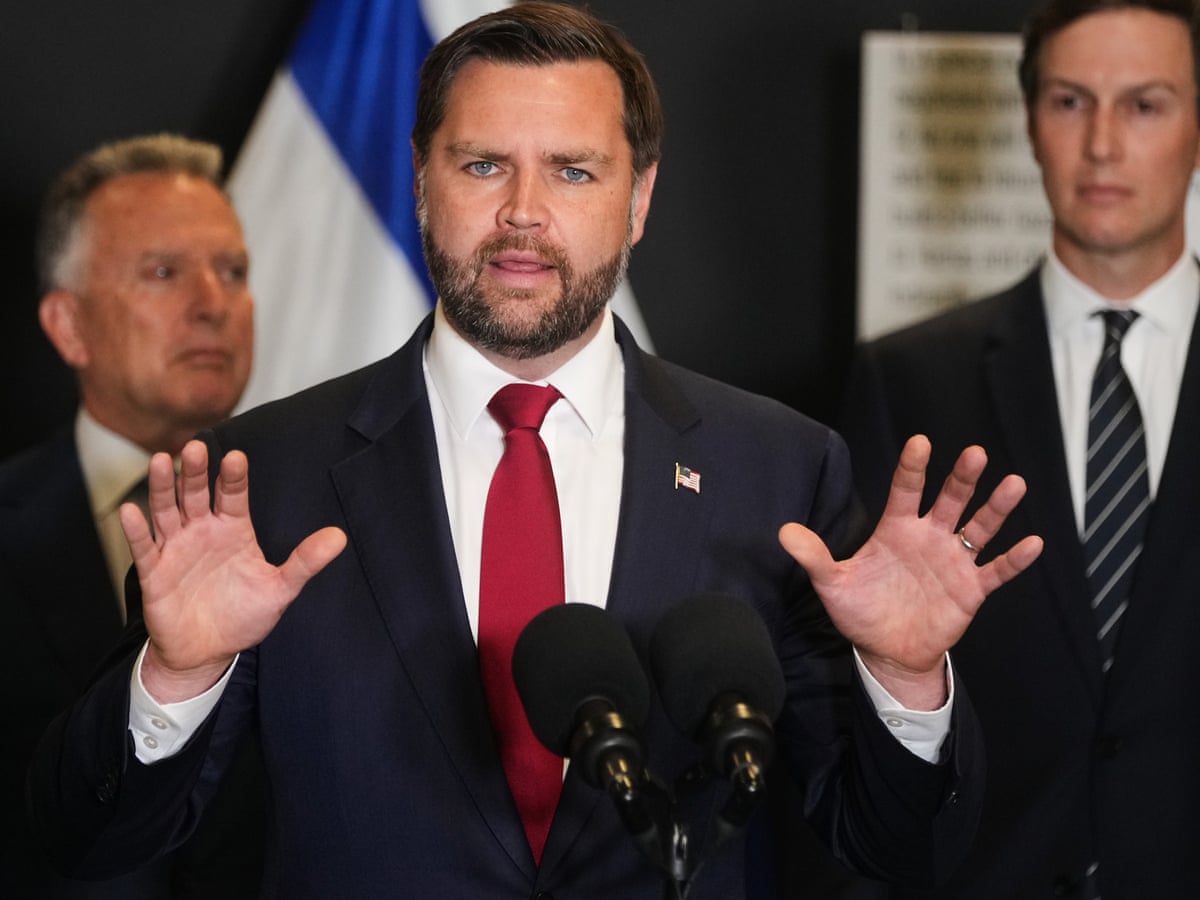
Fearing a collapse of the ceasefire, the U.S. sent key envoys — including Steve Witkoff, Jared Kushner, and Vice President J.D. Vance — to Israel. They urged Netanyahu to sustain the truce. Vance criticized Israel’s moves toward annexing parts of the West Bank, calling them politically irresponsible, while Trump reaffirmed opposition to any such annexation.
Establishment of CMCC (Civil-Military Coordination Centre)
During their visit, U.S. officials inaugurated the Civil-Military Coordination Centre (CMCC) near Gaza. Led by U.S. General Patrick Frank and staffed by 200 U.S. personnel, the centre aims to oversee the ceasefire, coordinate humanitarian aid, and enhance regional security cooperation. Several Western and regional nations have joined, with more expected soon.
Next Phase: Peace and Stabilisation Efforts
The U.S. Secretary of State Marco Rubio’s visit underscored Washington’s intent to advance the peace process. Discussions continue over forming an International Stabilisation Force (ISF) led by Egypt and drafting a UN Security Council resolution with backing from the U.S., UK, and France. While Russia and China have yet to fully agree, Arab nations support the plan.
Challenges in Implementation
Despite international backing, progress faces major obstacles: delays in aid, sporadic Israeli attacks, resistance to Rafah reopening, and disputes over the role of the Palestinian Authority. Israel’s internal political divisions further complicate implementation.
U.S. Strategic Interests
Unlike previous ceasefires, this one bears Trump’s personal imprint. His team’s active involvement and the CMCC’s creation underline Washington’s broader geopolitical aim — maintaining regional stability while expanding the Abraham Accords and securing U.S. strategic and economic interests in the Gulf.
Netanyahu’s Political Troubles
Netanyahu faces rising domestic challenges, including corruption trials, right-wing coalition pressures, and declining popularity. U.S. influence has curtailed his autonomy in Gaza policy. Any concessions he makes risk collapsing his fragile government, even as he confronts legal and political turmoil.
Conclusion: U.S. Balancing Power and Peace
The U.S. continues to balance ceasefire diplomacy with regional dominance. By leveraging its military presence and economic interests, it seeks to stabilize Gaza and strengthen its Middle East influence — even as Israeli politics and Palestinian divisions threaten to undermine the peace framework.
Key UPSC Relevance
- IR (International Relations): U.S. mediation in Middle East peace efforts; role of major powers in regional stability.
- GS Paper II: India can study such interventions to understand realpolitik in conflict resolution.
- GS Paper III: Humanitarian aid, coordination centres (CMCC), and post-conflict reconstruction mechanisms.
- Essay / Ethics: Diplomacy vs domestic politics; leadership dilemmas in wartime decision-making.