CATEGORY: National News Environment & Disaster Management
Cyclone Arnab Approaches India’s Eastern Coast
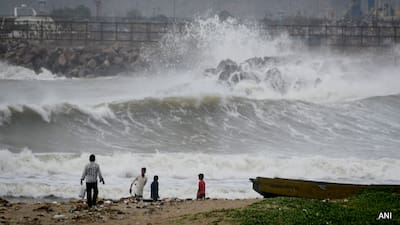
Cyclone Arnab has intensified into a very severe cyclonic storm over the west-central Bay of Bengal, prompting heightened disaster preparedness along the eastern coast of India. According to the India Meteorological Department (IMD), the cyclone is expected to cross the Andhra Pradesh and Yanam coasts, between Bapatla and Visakhapatnam, close to Yanam, by the forenoon of 28 October 2026.
The IMD has forecast maximum sustained wind speeds of 115–125 kmph, with gusts reaching up to 140 kmph. Coastal districts of Andhra Pradesh and parts of southern Odisha are likely to experience heavy to extremely heavy rainfall, rough sea conditions and possible flooding in vulnerable areas.
Current Status and Expected Landfall
The cyclone has been moving west-northwestwards over the Bay of Bengal and is forecast to turn northwestwards towards the Andhra Pradesh coast. The precise location and intensity of landfall may change as the system evolves.
The IMD has warned that a storm surge of approximately 1–1.5 metres above the astronomical tide could inundate low-lying coastal areas of Andhra Pradesh, with the highest peak surge expected around Kakinada and Yanam.
Andhra Pradesh and Odisha Step Up Preparedness
Authorities in Andhra Pradesh have initiated evacuations from vulnerable and low-lying areas and mobilised disaster-response resources. According to a Reuters report published on 27 October, nearly 50,000 people had been moved to shelters in Andhra Pradesh by Monday night, while evacuations were continuing.
Odisha has also intensified its preparations, particularly in districts vulnerable to heavy rainfall, flooding and landslides. Schools and colleges in several southern districts have been ordered to close as a precautionary measure.
At the national level, the National Crisis Management Committee has reviewed preparedness measures, with the Centre directing agencies to prioritise the protection of life, minimise damage to infrastructure and ensure the rapid restoration of essential services.
States Likely to Be Affected
- Andhra Pradesh and Yanam: Strong winds, heavy to extremely heavy rainfall, coastal inundation and possible damage to power and communication infrastructure.
- Odisha: Heavy to extremely heavy rainfall in southern districts, with potential flooding and landslides in vulnerable areas.
- Telangana and Chhattisgarh: Heavy rainfall is possible in affected areas.
- Bihar and eastern Uttar Pradesh: Rainfall associated with the broader weather system may affect these regions later in the week.
The severity and timing of impacts will depend on the cyclone’s movement and subsequent weather conditions. Residents should follow district-level advisories and official IMD bulletins.
Safety Advisory for Coastal Residents
Authorities have advised fishermen not to venture into the sea and have urged people in vulnerable coastal areas to follow evacuation instructions. Residents should secure loose objects, keep essential medicines and emergency supplies ready, charge mobile phones and avoid flooded roads, exposed coastal stretches and damaged electrical infrastructure.
People should rely on official weather updates and instructions issued by local administrations rather than unverified social media reports.
Why Is Cyclone Arnab Significant?
Cyclone Arnab highlights India’s continuing vulnerability to tropical cyclones originating in the Bay of Bengal. Coastal settlements face multiple hazards, including storm surges, intense rainfall, flooding, infrastructure damage and disruption of livelihoods.
The event also underscores the importance of effective early-warning systems, timely evacuation, cyclone shelters, resilient infrastructure and coordination among disaster-management agencies. While forecasting has improved, reducing casualties and economic losses requires preparedness at both the institutional and community levels.
Conclusion
As Cyclone Arnab approaches the Andhra Pradesh coast, the immediate priority remains protecting lives, evacuating vulnerable populations and ensuring that emergency services are ready to respond. The coming hours will be critical, and the latest IMD forecasts and local administrative instructions should guide all precautionary measures.
|
OFFICIAL UPDATES India Meteorological Department (IMD): https://mausam.imd.gov.in/
|
Editorial note: This report is based on information available on 27 October 2026. Forecasts and warnings are subject to change; consult official advisories for the latest information.
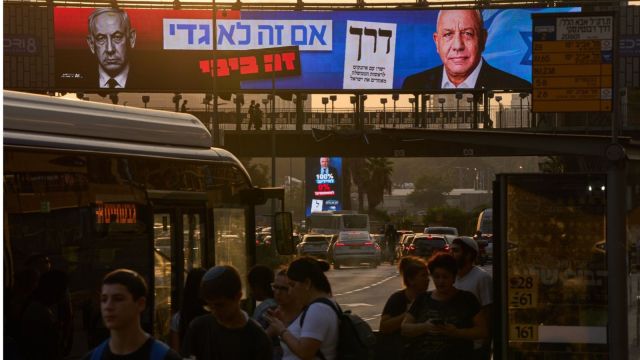
Israel’s parliamentary elections place Prime Minister Benjamin Netanyahu’s leadership under scrutiny, with security, the future of Gaza, judicial reform and the economy among the major issues shaping the contest.
Israel is holding its parliamentary elections on October 27, 2026, in a politically significant contest that could determine the country’s domestic direction and its approach to the wider West Asian region. Prime Minister Benjamin Netanyahu is seeking another term amid continuing debates over national security, the October 7, 2023, attacks, the war in Gaza and the performance of his government.
The election is also a test of Israel’s parliamentary system, in which winning the largest number of votes does not automatically guarantee the right to govern. The ability to assemble a coalition with sufficient support in parliament is central to determining who becomes prime minister.
How Does Israel’s Electoral System Work?
Israel follows a parliamentary system of government. Its legislature, the Knesset, is a unicameral parliament comprising 120 members, elected for a four-year term under normal circumstances.
Unlike India’s first-past-the-post system, in which candidates compete in individual constituencies, Israel uses a nationwide party-list proportional representation system.
Under this arrangement, voters cast their ballots for political parties rather than directly electing individual constituency representatives. Parties receive parliamentary seats broadly in proportion to their share of the national vote, subject to the electoral threshold and seat-allocation rules.
A party must secure at least 3.25% of the valid vote to qualify for representation in the Knesset. This threshold influences electoral strategies, encouraging smaller parties to cooperate or form joint lists to avoid losing representation.
The proportional system allows a wide range of political parties to enter parliament. However, it can also produce a fragmented legislature in which no single party has enough seats to govern independently.
Why Is Coalition Formation So Important?
A party that finishes first in the election does not automatically form the government. The decisive factor is whether its leader can assemble a coalition capable of securing parliamentary confidence.
In Israel, a coalition generally seeks the support of at least 61 of the Knesset’s 120 members. Following the election, President Isaac Herzog consults political parties and assigns a member of the Knesset the task of forming a government.
The designated candidate negotiates with other parties over policy commitments, ministerial positions and the terms of a coalition agreement. These negotiations can take considerable time, particularly when the election produces a closely divided parliament.
Smaller parties may consequently exercise substantial influence despite winning only a limited number of seats. Their support can determine which political bloc forms the government and what policies it pursues.
If coalition negotiations fail, further attempts may be made under Israel’s constitutional framework. Failure to establish a government can ultimately lead to another election.
Who Are the Main Political Contenders?
The election features a contest between Netanyahu’s right-wing political alliance and an opposition camp seeking to replace his government.
Benjamin Netanyahu and Likud: Netanyahu, Israel’s longest-serving prime minister, is seeking another term. His political position is closely associated with national security, a right-wing policy agenda and partnerships with religious and nationalist parties. His leadership has also faced scrutiny over the security failures surrounding the October 7, 2023, attacks and his ongoing corruption trial, in which he denies wrongdoing.
Gadi Eisenkot and the opposition: Former military chief Gadi Eisenkot has emerged as a major opposition figure through his Yashar party. The wider opposition includes political forces associated with Naftali Bennett, Yair Lapid, Avigdor Lieberman and Yair Golan. Although these parties share opposition to Netanyahu’s continued leadership, they differ on several ideological and policy questions.
Religious and nationalist parties: Parties such as Otzma Yehudit, associated with Itamar Ben-Gvir, and Religious Zionism, associated with Bezalel Smotrich, are important components of Netanyahu’s political camp. Ultra-Orthodox parties also have considerable influence in coalition negotiations, particularly on religious policy, education and military-service exemptions.
Arab political parties: Arab-led parties represent another important dimension of Israel’s political landscape. Their parliamentary strength could become significant if neither major political bloc secures a clear majority. However, resistance among several mainstream Jewish-led parties to formal cooperation with Arab parties can complicate government formation.
What Are the Major Issues in the Election?
1. National security and the October 7 attacks
Security remains one of the most important issues confronting Israeli voters. The Hamas-led attacks of October 7, 2023, exposed serious weaknesses in Israel’s security and intelligence arrangements.
The subsequent war in Gaza, alongside conflict and tensions involving other regional actors, has intensified questions about military strategy, deterrence and the country’s long-term security objectives.
The election is therefore an opportunity for voters to assess the government’s record and competing proposals for preventing future attacks.
2. The future of Gaza and the Palestinian question
Israel’s military campaign in Gaza has had devastating humanitarian consequences for Palestinians and has drawn sustained international scrutiny.
The future governance of Gaza, the security arrangements along Israel’s borders, humanitarian access and the broader Israeli-Palestinian conflict remain central to the country’s regional outlook.
The positions adopted by the next government will influence Israel’s relations with regional states, its international partnerships and prospects for a political settlement.
3. Judicial reform and democratic institutions
Judicial reform has been a major source of political division in Israel. Proposals to limit judicial powers and change the relationship between the executive, legislature and judiciary have generated significant public debate and protests.
Supporters of reform argue that elected representatives should have greater authority over policymaking. Critics contend that weakening judicial oversight could undermine institutional checks and balances.
The election may influence the future direction of these reforms and the broader debate over democratic accountability.
4. Military-service exemptions
The question of military service for ultra-Orthodox Jewish men is another contentious issue.
Israel’s military relies heavily on compulsory service and reserve mobilisation. Critics of exemptions argue that military responsibilities should be shared more equitably, particularly during prolonged periods of conflict.
Ultra-Orthodox political parties, meanwhile, seek to protect arrangements that allow many members of their communities to devote themselves to religious study.
The issue carries implications for coalition stability, social cohesion and the distribution of national responsibilities.
5. Cost of living and economic pressures
Security expenditure, the consequences of regional conflict and pressures on public finances have made economic concerns increasingly important.
Voters are also concerned about household expenses, employment, public services and the sustainability of government spending.
The next administration will face the challenge of balancing defence requirements with economic recovery and domestic welfare priorities.
Why Is Political Instability a Recurring Feature of Israeli Elections?
Israel’s proportional representation system allows smaller parties to win seats and participate in government. While this provides representation to diverse political and social groups, it can also make coalition formation difficult.
Political disagreements over religion, security, judicial authority and the Palestinian question frequently complicate negotiations. A government may depend on several parties whose support is conditional on specific policy commitments.
Personal rivalries and disputes over Netanyahu’s leadership have also become important dividing lines in recent elections.
The 2026 contest is particularly significant because neither the incumbent coalition nor the opposition bloc appears assured of securing the 61 seats generally required for a stable majority. Consequently, the final parliamentary arithmetic and the position of smaller parties could prove decisive.
What Could the Election Mean for West Asia?
The election has implications beyond Israel’s domestic politics. The next government’s decisions on Gaza, the occupied West Bank, military operations and regional diplomacy will affect relations with neighbouring countries and international partners.
A government committed to continuing the existing security approach could preserve important elements of current policy. A change in leadership could create opportunities for a reassessment of priorities, although a change of government would not necessarily mean an immediate shift on every major issue.
The election will also be watched by countries seeking regional stability and progress towards a political resolution of the Israeli-Palestinian conflict.
For India, developments in Israel are relevant to bilateral cooperation in defence, technology, agriculture and trade, as well as wider concerns involving regional security, energy markets and the safety of Indian nationals.
Conclusion
Israel’s 2026 parliamentary election is about more than choosing political representatives. It is a test of public confidence in the government, the country’s security strategy and the functioning of its democratic institutions.
The outcome will depend not only on the distribution of votes but also on the ability of political parties to negotiate a workable parliamentary majority. With security, the future of Gaza, judicial reform, military-service exemptions and economic pressures dominating the debate, the election could shape Israel’s political direction and its regional relationships for years to come.
Sources and further reading:
The Hindu — "A Guide to Israel’s Elections"
https://www.thehindu.com/news/international/the-view-from-india-newsletter-a-guide-to-israels-elections/article71627046.ece