
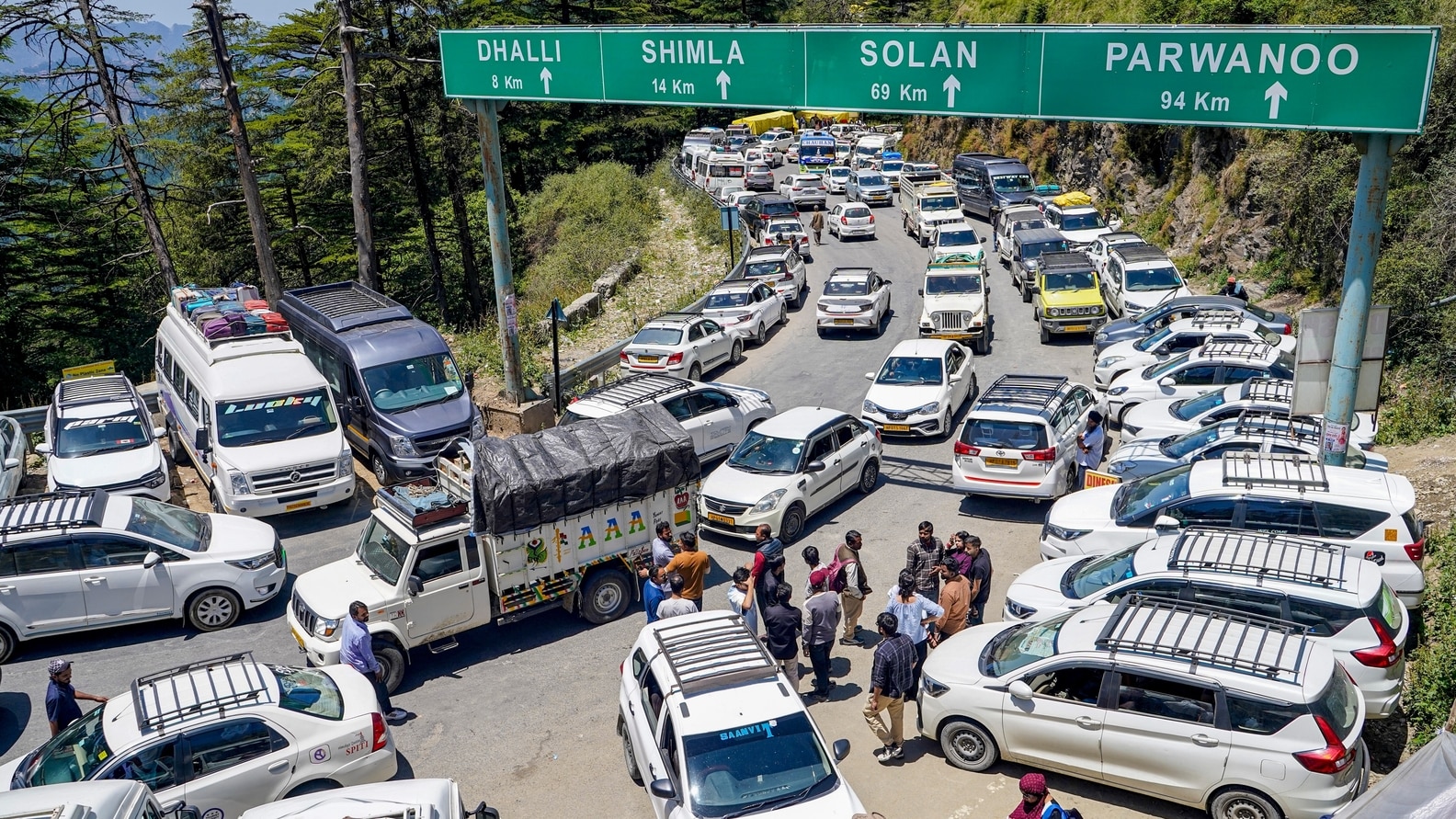
The Supreme Court-appointed Central Empowered Committee (CEC) has recommended stricter environmental safeguards for tourism, road expansion and construction in Himachal Pradesh amid growing concerns over ecological degradation in the fragile Himalayan region.
In its report to the Supreme Court, the committee called for scientific assessments of the carrying capacity of major tourist destinations, taking into account tourist footfall, roads, parking facilities, waste management and ecological sensitivity. It also recommended temporary restrictions on tourism-related activities in areas facing severe congestion or environmental stress until such assessments are completed.
The panel highlighted concerns over unplanned construction, extensive hill cutting and landslides linked to engineering deficiencies. It noted that the National Highways Authority of India had approved ₹825 crore for the restoration and stabilisation of the Kiratpur–Manali highway corridor after geological studies identified 44 critical landslide-prone and vulnerable locations.
The CEC also recommended reviewing exemptions from environmental clearance for certain highway expansion projects and considering mandatory clearance for the construction or expansion of hill roads with two or more lanes and railway lines.
Another major concern was the reported 10% shortfall in compensatory afforestation for forest land diverted since 1980–81. The committee called for pending afforestation work to be completed and urged coordinated regulation and continuous monitoring of development activities.
The Supreme Court had taken suo motu cognisance of environmental concerns in Himachal Pradesh in July 2025. The state government has been given time to respond to the committee’s recommendations.
The report underlines the need to move beyond a permission-based development model towards scientific planning that respects the ecological limits of the Himalayas. Its implementation could play an important role in balancing tourism-led economic growth with environmental protection and disaster resilience.